
Episodes > Season 4
Episode 150
03.03.2026

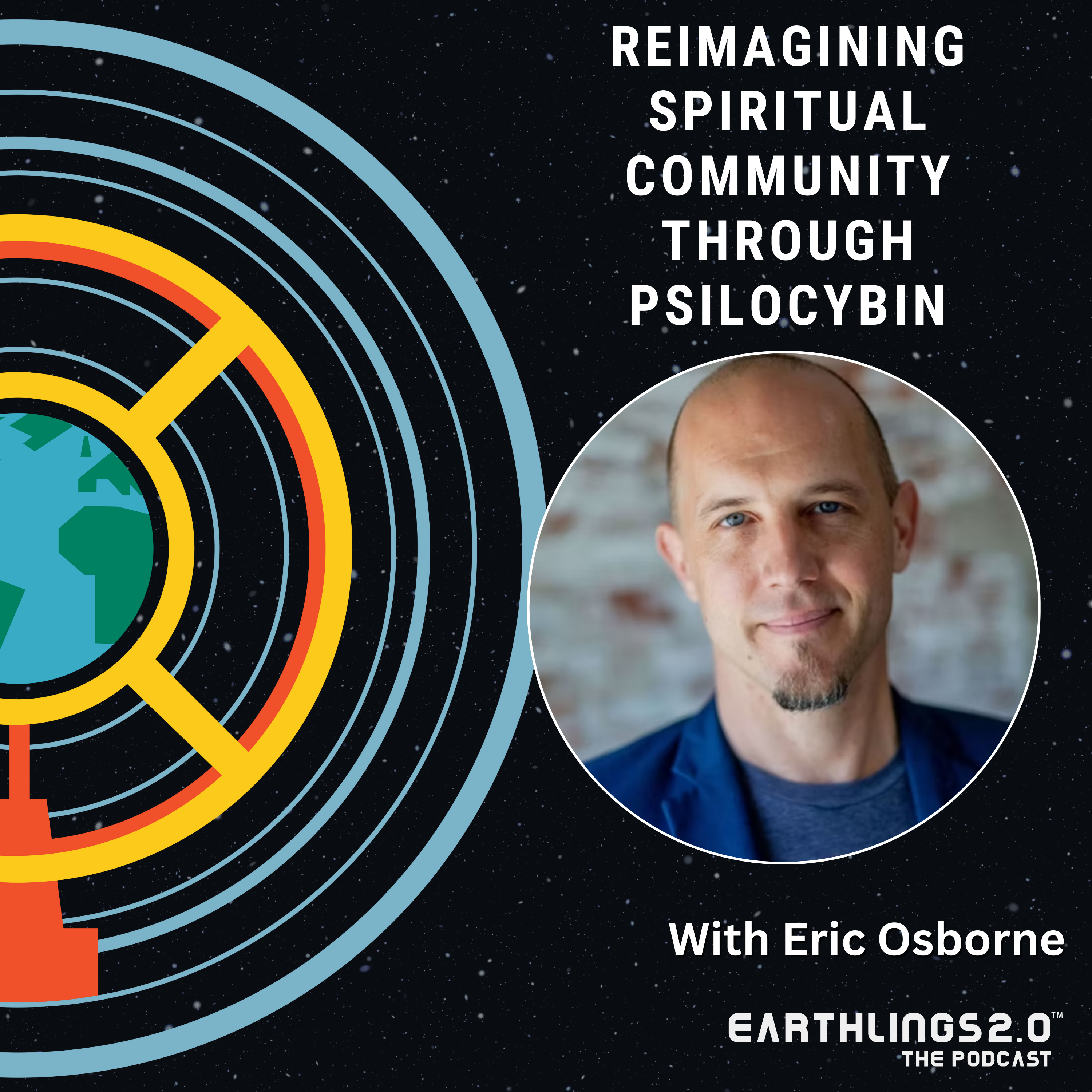
#150 – Reimagining Spiritual Community Through Psilocybin with Psanctuary

Hosted by Lisa Ann Pinkerton

Listen On

Spotify
Apple
YouTube
RSS

#150 – Reimagining Spiritual Community Through Psilocybin with Psanctuary

Hosted by Lisa Ann Pinkerton

In this episode of Earthlings 2.0, we sit down with Eric Osborne, Co-Founder, Board President and Community Minister of Psanctuary, to explore the rise of mushroom church communities and what intentional psilocybin practice can offer that clinical or purely recreational models often miss. We discuss why nature-based experiences can deepen spiritual connection, how Sanctuary is structured as a peer-led community designed to restore a modern “third space,” and why group support and integration may matter as much as the medicine itself. The conversation also zooms out to the broader psychedelic landscape while grappling with the risks of commercialization, ego-driven “guru” culture, and the challenge of building communities resilient enough to work through conflict rather than fracture under it.

We also discussed this topic in different capacities on a few previous episodes. You can watch or listen here:

\

Share

Listen On

Spotify
Apple
YouTube
RSS

Talking Points

  • Community is becoming the missing infrastructure for psychedelic healing – Eric argues the church model helps rebuild the third space many people have lost, where belonging, ongoing support, and integration can happen beyond a single experience.
  • Sanctuary is designed to keep ceremonies accessible and non-transactional – Donation-based ceremonies and the Friends & Family ministry aim to reduce the energetic “obligation” that money can introduce, while training people to responsibly support their own circles.
  • Legal recognition is evolving, but the landscape remains uneven – Eric explains how religious protections and court precedents shape Sanctuary’s approach, while noting that broader legalization frameworks can still create high costs, limited access, and rules that don’t always reflect lived facilitator experience.

Resources + Links