
In this episode of Earthlings 2.0, we chat with Joe Castagneri, Director of Software at AMP, about why so much recyclable material still ends up in landfills, and how the economics of waste sorting are at the heart of the problem. Joe explains why recycling in rural areas often doesn’t pencil out, how the legacy systems incentivize hauling and burying waste, and how AMP’s computer vision and robotics are helping build a new model for diversion facilities that could finally scale circularity. Joe shares insights into the history of recycling, the limitations of current systems, and why the future may look like integrated diversion facilities rather than separate recycling programs.
Episodes > Season 4
Episode 116
07.01.2025
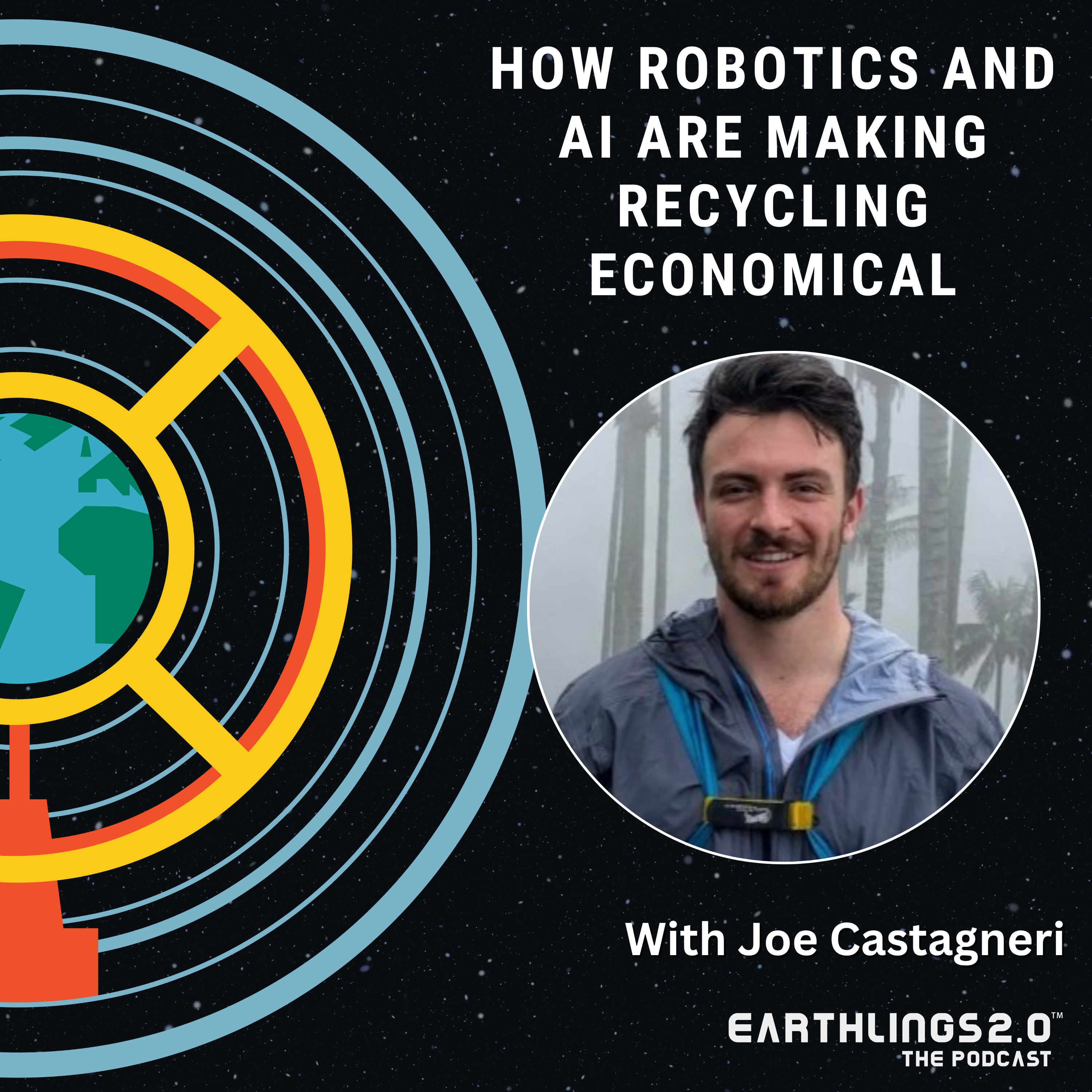
#116 – How Robotics and AI Are Making Recycling Economical with AMP
Hosted by Lisa Ann Pinkerton
Listen On
Spotify
Apple
YouTube
RSS
#116 – How Robotics and AI Are Making Recycling Economical with AMP
Hosted by Lisa Ann Pinkerton
Share
Listen On
Spotify
Apple
YouTube
RSS
Talking Points
- Recycling Only Works Economically Where Density Justifies It: Castagneri explains that recycling programs depend on having enough people generating waste in a concentrated area to offset the costs of sorting and transporting material. In rural regions or freight-constrained areas, recycling simply doesn’t pencil out, and landfilling becomes the default option.
- AI and Robotics Are Unlocking a Cheaper, Scalable Model: AMP’s approach replaces expensive optical sensors and manual labor with neural networks and low-cost vision systems that can sort materials with high speed and precision. By building facilities that cost less to construct and operate, this technology makes it possible to recycle more materials in more places profitably.
- Diversion Facilities Can Redefine Waste Management: Rather than maintain separate recycling and trash systems, AMP envisions integrated diversion facilities that automatically extract recyclables and organics from all waste streams. This shift could fundamentally change how landfills are used, increasing circularity while reducing methane emissions and disposal costs.
Resources + Links
- Joe Castagneri, Director of Software at AMP, LinkedIn
- Lisa Ann Pinkerton, Earthlings 2.0 Host, CEO of Technica Communications, and Founder of Women in Cleantech and Sustainability, LinkedIn